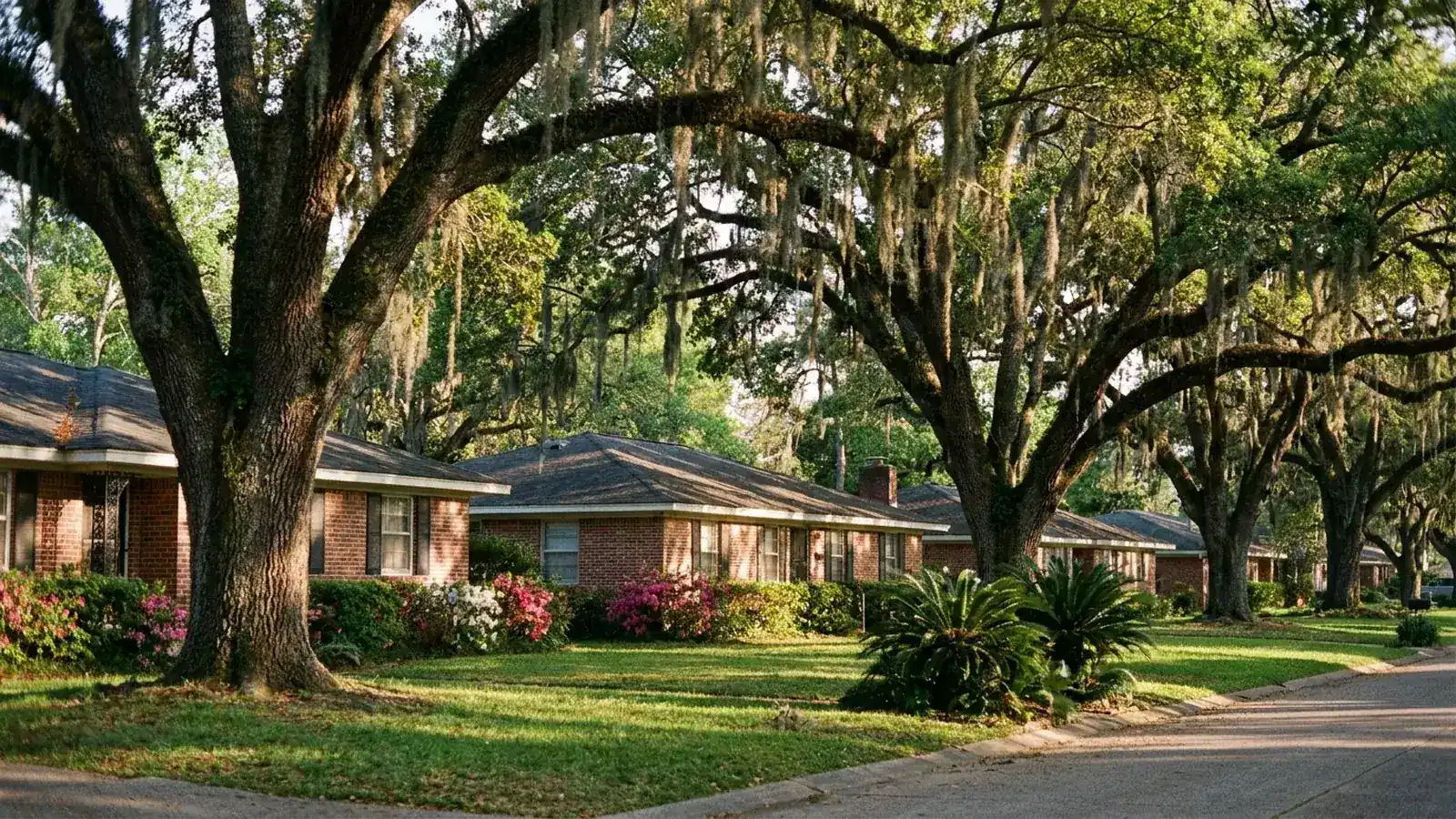
Helical piers in Baton Rouge cost $4,000–$15,000 for most full repairs, with piers commonly $1,200–$3,000 each. In soft alluvial and deltaic clay that loses bearing capacity when saturated, a screwed pier reporting its own torque is usually a better instrument than a driven one hunting for refusal.
Why the soil argues for torque verification, the second cause of movement in this metro, and when a push pier is still right.
Soft clay, and what that does to a driven pier
This metro sits on soft alluvial and deltaic clays with a high water table — material that consolidates under load and loses bearing capacity when it is saturated. A driven pier looks for something firm to refuse against, and in a profile like this that layer can be deep, inconsistent, or seasonally unreliable.
A helical pier does not need to find refusal. The torque needed to turn it correlates with the capacity it will carry, so it can be advanced to a verified number rather than to a feeling.
How a helical pier differs from a driven one
A push pier is hydraulically driven into the ground using the weight of the building as the thing it pushes against, until it refuses on something firm. A helical pier is screwed in, and the torque required to turn it correlates with the capacity it will carry — so it reports what it has found as it goes rather than only at the end.
That difference decides which is right far more often than price does.
The second cause of movement here, which no pier fixes
Baton Rouge has two separate causes of foundation movement rather than one: ordinary moisture cycling in soft clay, and ground displacement along an active surface fault. They present similarly from inside a house and they are not the same problem.
Underpinning addresses the first. Where a survey suggests the second, that is a different conversation and a pier plan drawn without asking the question is a pier plan drawn too early.
When a push pier is still the right call
Where the structure is heavy enough to react against and there is a genuinely firm stratum at reachable depth, driven piers are simpler and often cheaper. The evaluation says which case you are, and the quote explains why.
Helical piers, answered
What do helical piers cost in Baton Rouge?
$1,200–$3,000 per pier, with most full repairs landing at $4,000–$15,000. The count and the depth drive it, not the pier type.
Why helical rather than push piers here?
Because soft alluvial clay may not give a driven pier reliable refusal. A helical pier's installation torque correlates with capacity, so it can be advanced to a verified number instead of hunting for a firm layer that may be seasonal.
Could my movement be the fault rather than the soil?
It is worth asking here, which is unusual. This metro has an active surface fault as well as ordinary moisture cycling, and the two look alike from inside. A pier plan drawn without asking is drawn too early.
Do helical piers work in a high water table?
Helical piers work in a high water table, and it is one of the situations they suit. The capacity comes from the helix bearing in competent soil rather than from end refusal, and the torque reading records what was achieved at each location.
Is a helical pier the right tool for this ground?
Soft alluvial clay with a high water table is exactly the ground helical piers were designed for: push piers want resistance the parish's upper layers cannot always supply, while a torque reading works in soft ground.
| Option | What it does | On this ground specifically |
|---|---|---|
| Helical pier | Screwed in until the torque proves the capacity | The natural fit — capacity is proven by torque, not by what soft clay can resist |
| Push pier | Driven to refusal using the structure as ballast | Harder here: consolidating alluvium can let a drive run long before real refusal |
| Pressed pilings | Precast sections pushed down and capped | Common in the region and dependent on the same soft-ground caveats |
| Stabilise the soil | Manage moisture so the ground stops moving at all | Matters more than usual — clay that loses bearing when saturated rewards water control |
One parish-specific note: movement along the Baton Rouge Fault is ground displacement, not settlement. Piers of any kind address the second, and a site on the scarp deserves to know which it has.
Get a free Baton Rouge foundation evaluation
Tell us what the house is doing and roughly when it started — a crack that opens in dry weather and closes after rain reads differently from one that only ever widens. If you know which way the floor falls, say so. That single detail often separates a moisture problem from a ground-movement problem before anyone visits. Same working day reply.